Sun Life
Design system enhancement · CMS execution
I put Sun Life’s global design system into the CMS: one language for typography, colour, spacing, and components across regions, without local needs becoming one-off UI.
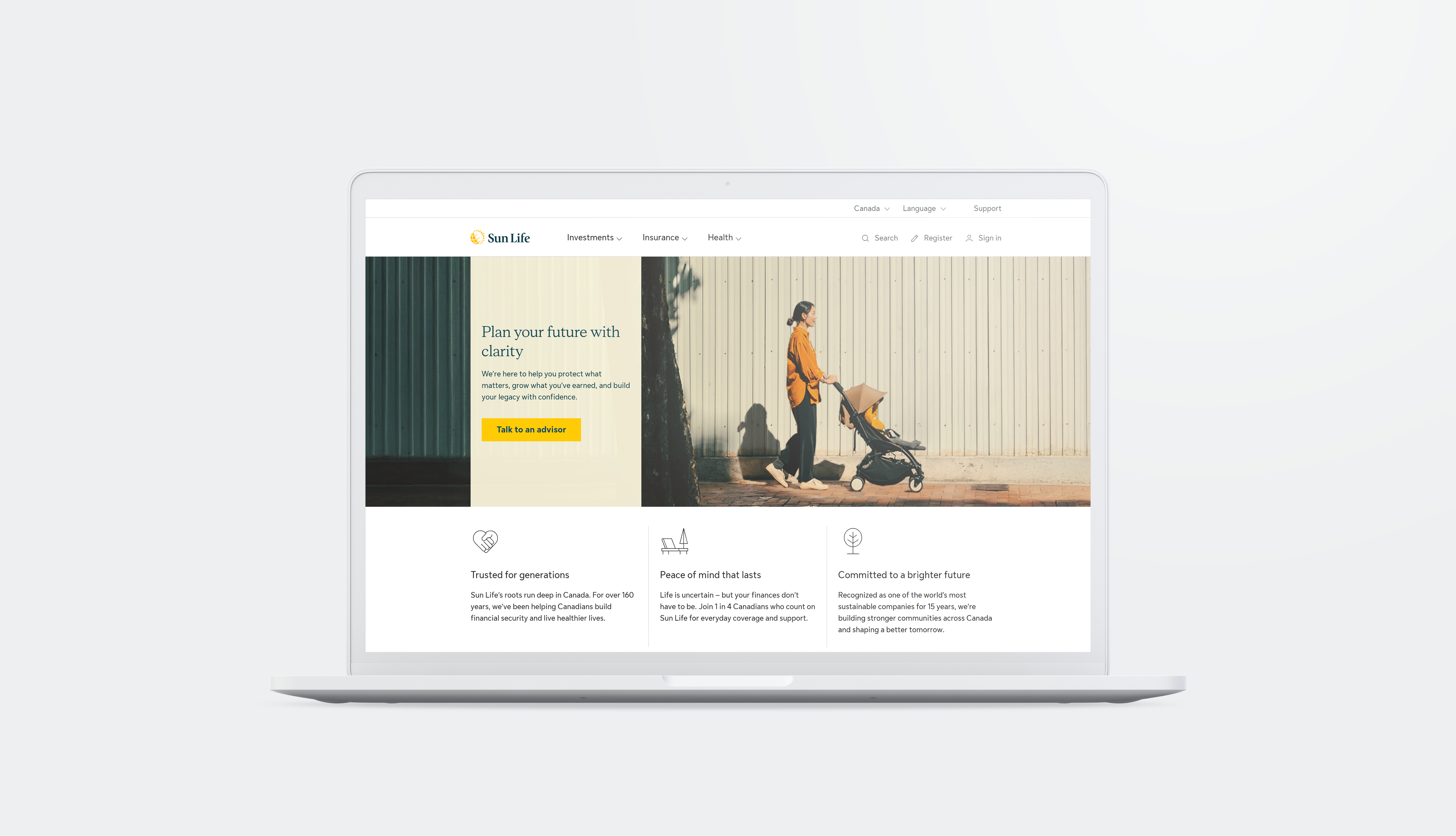
Rollout
Constraints
One global system, many regions: align stakeholders without diluting the library.
Keep CMS throughput high while patterns, not exceptions, stayed the default.
WCAG and multilingual layouts had to hold in production, not only in review.
Approach
The work came down to four moves: embedding the global system directly into the CMS rather than running it alongside, using regional UX specs as the source of truth for what "correct" actually meant, keeping publishing and staging verification tight, and holding accessibility standards across every locale. The six areas below show what that looked like in practice.
Design System Implementation
Applied the global Sun Life design system within the CMS, ensuring consistency in typography, color, spacing, and component usage.Tokens and components in the CMS so authors build inside the system, not around it.
Stakeholder Collaboration
Partnered with UX designers, product owners, and business analysts.Cross-functional alignment so drift and edge cases surface before they multiply in the CMS.
Content Publishing Workflow
Managed end-to-end publishing for a wide range of page types.End-to-end throughput with patterns, not one-offs, as the default path.
UX Alignment
Ensured adherence to UX guidelines provided by regional UX teams.Regional rules on spacing, colour, and assets were the spec; when something was ambiguous, we escalated to UX instead of improvising.
Accessibility & Localization
Conducted checks for accessibility standards (WCAG) and adapted layouts for multilingual audiences across different regions.WCAG and layout checks so translation and regional variants don’t break hierarchy or usability.
Feedback & Iteration
Collaborated with QA and UX teams to test pages pre-launch, addressing issues before going live.Publish, test, fix, re-verify in staging so production isn’t the first real test.
Live scope
Includes linked subpages. This is where template discipline either holds or quietly erodes.
Documentation
Per-site UX guidelines were the practical layer on top of the global system: when they were clear, publishing was fast; when they weren’t, we escalated to UX instead of improvising in the CMS.
Impact
- Stronger cohesion across markets: fewer rogue layouts, more intentional reuse of system patterns.
- Faster iteration once templates and rules were stable in the CMS; clearer reviews for stakeholders.
- Accessibility and consistency treated as part of shipping, not a late gate.
Conclusion
The design system wins when the CMS and governance make the right pattern the easy one. I connected UX intent to live pages at scale: hundreds of routes, one disciplined language.